
Northrop Grumman says it will build two manufacturing prototypes of an expandable command workspace for the US Army's Integrated Battle Command System (IBCS), with delivery due by June 2027. The company announced the $21 million effort on 13 October 2026.
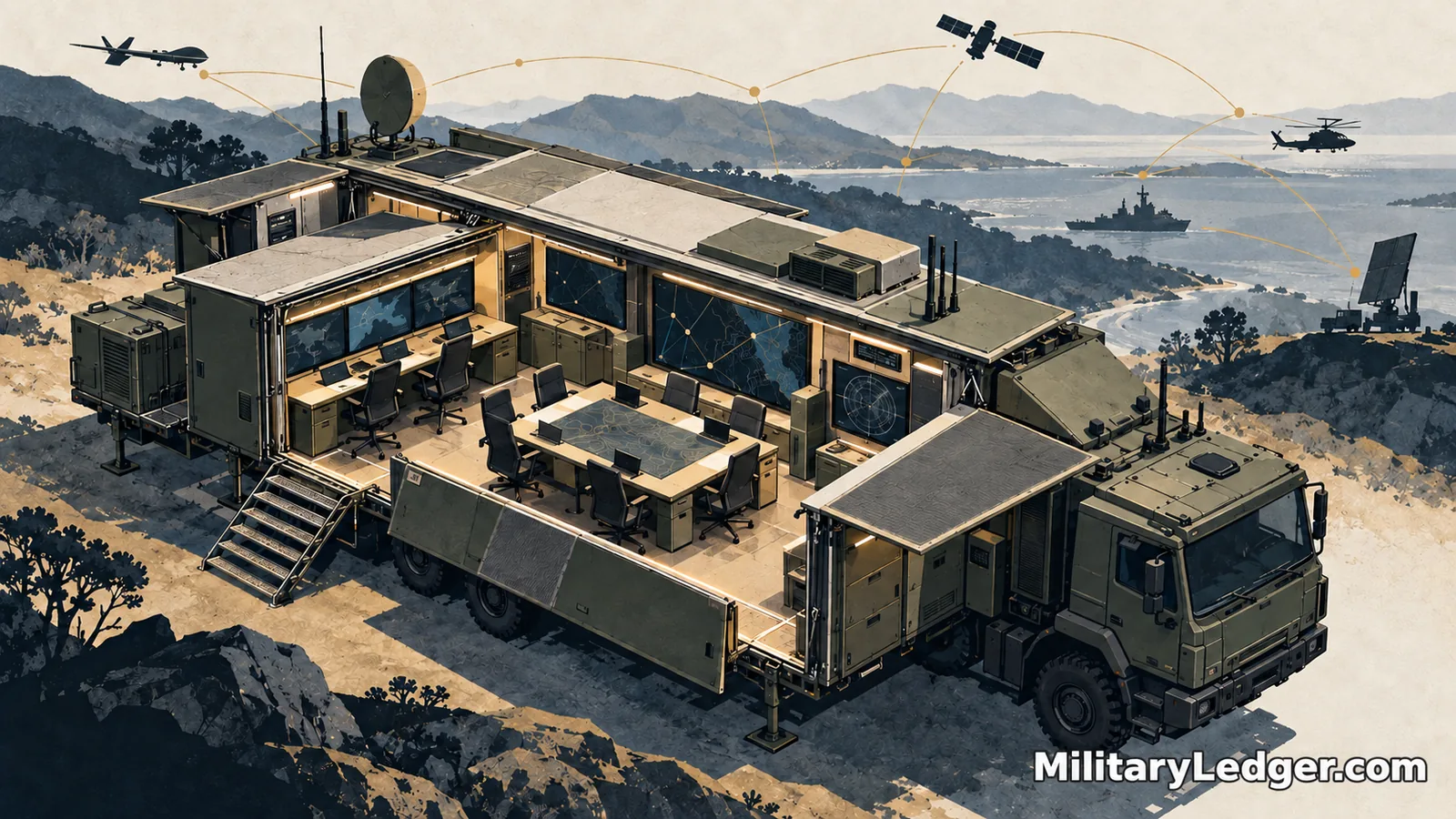
The proposed change is tangible: move the workspace from a tent into a van with sides that extend to create more room. It concerns the place where personnel operate the network, rather than a new radar or interceptor.
A different home for the command team
The company's announcement, republished in full by MarketScreener, describes a modified Integrated Collaborative Environment, or ICE. Its proposed layout accommodates six operator workstations and four staff-operation stations.
Northrop says the design would improve protection and mobility while shortening setup and teardown. Those are the company's objectives and performance claims. The release does not provide comparative test results, a protection standard or a measured time saving.
The distinction matters because a better workspace can be one part of improving a command system without changing what every connected weapon can do. Extra space, transportability and protection are different characteristics; evidence of one does not automatically establish the others. The announcement provides a configuration to assess, not a demonstrated operational outcome.
The workspace sits inside a wider network
IBCS is a command-and-control system intended to connect sensors and weapons that were not originally designed to operate together. Northrop's program description explains that information from different systems is brought into a shared network to support decisions.
That helps explain why the ICE matters without confusing it with the whole system. A command workspace houses the people using the information. Radars detect threats, communications move information and weapons conduct engagements. Their relationship is central to how layered air defense works.
Changing the shelter does not, by itself, establish a new detection range, interception probability or ability to withstand an attack. None of those results can be calculated from the station count or the contract value.
What June 2027 would establish
The announced deliverable is two manufacturing prototypes. Delivery would be a development milestone, but it would not by itself demonstrate acceptance, successful operational testing or deployment to units. Those stages require their own evidence, as with other defense procurement milestones.
The release does not identify an Army contract number or publish acceptance criteria, weight, dimensions or power requirements. Those omissions leave practical questions for later documentation rather than grounds to assume either success or failure. For now, the specific commitment Northrop describes is a pair of prototypes by June 2027; demonstrated performance and any wider fielding decision remain separate questions.